
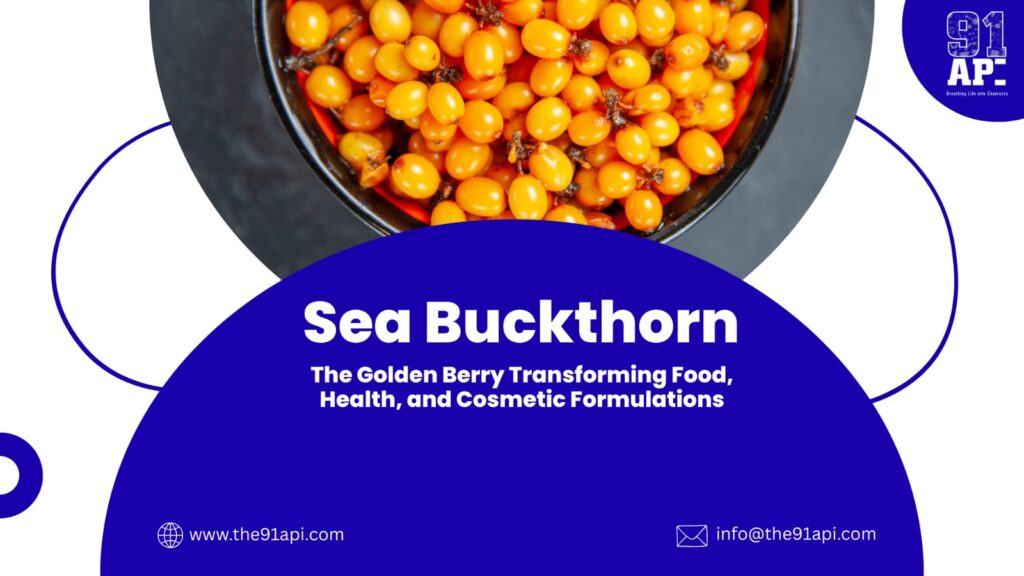
If there is one botanical that has captured the imagination of formulators across health, nutrition, and skincare industries, it is Sea Buckthorn (Hippophae rhamnoides)—a hardy, bright orange berry often called “liquid gold” or “holy fruit of the Himalayas.” From traditional Tibetan medicine to cutting-edge cosmeceuticals, sea buckthorn offers an unmatched phytochemical profile that makes it a dream ingredient for product developers.
In this blog, we’ll dive deep into the cultivation origins, phytoactives, various forms, and industry-wise applications of this extraordinary plant.
Where Does Sea Buckthorn Grow?
Sea buckthorn is a resilient, nitrogen-fixing shrub thriving in nutrient-poor soils and harsh climates. Its natural habitats include:
1. The Himalayan Region (India, Nepal, Bhutan, Tibet)
- Grows at altitudes of 2,000–4,500 meters
- Exposed to extreme UV radiation and sub-zero temperatures
- Produces berries exceptionally high in antioxidants to survive oxidative stress
2. Europe (Finland, Germany, Russia, Baltic Region)
- Coastal and mountainous zones
- Cultivated varieties often optimized for oil yield
3. China & Mongolia
- China is the world’s largest cultivator
- Used extensively for soil conservation and reforestation
The plant’s ability to survive severe environmental stressors is precisely why its phytochemical profile is so concentrated and potent.
A Treasure-Trove of Phytoactives
Sea buckthorn contains over 190 bioactive compounds, making it one of the most nutrient-dense botanicals used in formulations.
Key Phytoactives:
- Vitamins: A, C (up to 10× oranges), E, K
- Carotenoids: β-carotene, lutein, zeaxanthin, lycopene
- Essential Fatty Acids: Omega-3, -6, -7, -9
- Phytosterols: β-sitosterol
- Polyphenols: Flavonols (isorhamnetin, quercetin), phenolic acids
- Minerals: Fe, Mg, K, Ca
- Amino acids
But the magic lies in how different parts of the plant contain different actives.
Forms of Sea Buckthorn & Their Phytoactive Profiles
1. Sea Buckthorn Juice (Pulpy Extract)
Phytochemicals:
- High vitamin C
- Polyphenols (flavonols and phenolic acids)
- Carotenoids
Benefits:
- Immunity support
- Anti-inflammatory action
- Cardiovascular health
- Antioxidant boost
Applications: beverages, functional shots, nutraceutical syrups.
2. Sea Buckthorn Berry Oil (Pulp Oil)
Phytochemicals:
- Extremely rich in carotenoids, especially beta-carotene
- High omega-7 (palmitoleic acid)
- Vitamin E & K
Benefits:
- Skin repair & wound healing
- Mucosal hydration (gut, vaginal, ocular)
- Anti-aging properties
Applications: skincare serums, wound-healing creams, dietary supplements.
3. Sea Buckthorn Seed Oil
Phytochemicals:
- Omega-3 & omega-6 in a near ideal 1:1 ratio
- Tocopherols & tocotrienols
- Phytosterols
Benefits:
- Anti-inflammatory
- Supports heart health
- Improves barrier function of the skin
Applications: cosmeceuticals, capsules, anti-inflammatory formulations.
4. Sea Buckthorn Leaves Extract
Phytochemicals:
- Rich in flavonoids (isorhamnetin, quercetin)
- Catechins
- Tannins
Benefits:
- Antioxidant
- Antimicrobial
- Supports metabolic health
Applications: tea blends, animal nutrition, nutraceutical powder blends.
Health Benefits Backed by Science
Sea buckthorn’s unique synergy of vitamins, polyphenols, and fatty acids offers multiple health advantages:
- Anti-inflammatory & Antioxidant Defense
- Anti-aging & skin regeneration
- Supports gut, liver, and metabolic health
- Wound healing and tissue repair
- Immune-modulation
- UV protection due to high carotenoid content
Its natural omega-7 content (rare in plant sources) makes it particularly important for mucosal health—a key driver behind its rise in dermatology and nutraceutical products.
Industry-wise Uses of Sea Buckthorn
1. Food & Beverage Industry
- Functional juices
- Energy drinks
- Fortified yogurts
- Jams, purees, fermented beverages
- Natural colorant (carotenoid-rich)
Why formulators love it:
Exceptional antioxidant stability + vibrant color + tangy flavor profile
2. Nutraceutical & Health Supplements
Used in:
- Softgel capsules
- Functional oils
- Immunity blends
- Anti-aging complexes
- Women’s health supplements
Claims commonly associated:
Cellular protection, mucosal hydration, eye and skin health
3. Cosmetics & Skin Care
Sea buckthorn is a star ingredient in:
- Anti-aging serums
- Barrier repair creams
- After-sun products
- Lip balms
- Wound healing ointments
Why cosmetics formulators choose it:
- Polyphenols protect against oxidative stress
- High omega-7 accelerates epithelial regeneration
- Carotenoids give natural radiance
Pharmaceutical & Therapeutic Use - Emerging research supports:
- Burn and wound healing formulations
- Dermatology preparations
- Anti-ulcer nutraceuticals
- Anti-inflammatory products
5. Other Sectors - Animal feed supplements
- Bioenergy & reforestation
- Natural dyes and pigments
Why Sea Buckthorn is a Formulator’s Dream Ingredient
- Multi-functional: antioxidant, colorant, bioactive source
- Wide application compatibility—water- or oil-based systems
- Clean-label appeal
- Strong sustainability story
- High consumer acceptance due to its natural and Ayurvedic/Tibetan heritage
Whether you are developing a skincare serum or a functional beverage, sea buckthorn provides the ideal blend of stability, potency, and story value.
Final Thoughts
Sea buckthorn is more than just a trending super-ingredient—it is a scientifically validated, nutrient-dense botanical with immense formulation versatility. Its ability to support skin, immune, metabolic, and mucosal health gives it a unique position across industries.